
From emailed orders to reviewable decisions.
A hypothetical dealer order shows how to connect document intake, business rules, human approval, and a confirmed system write.
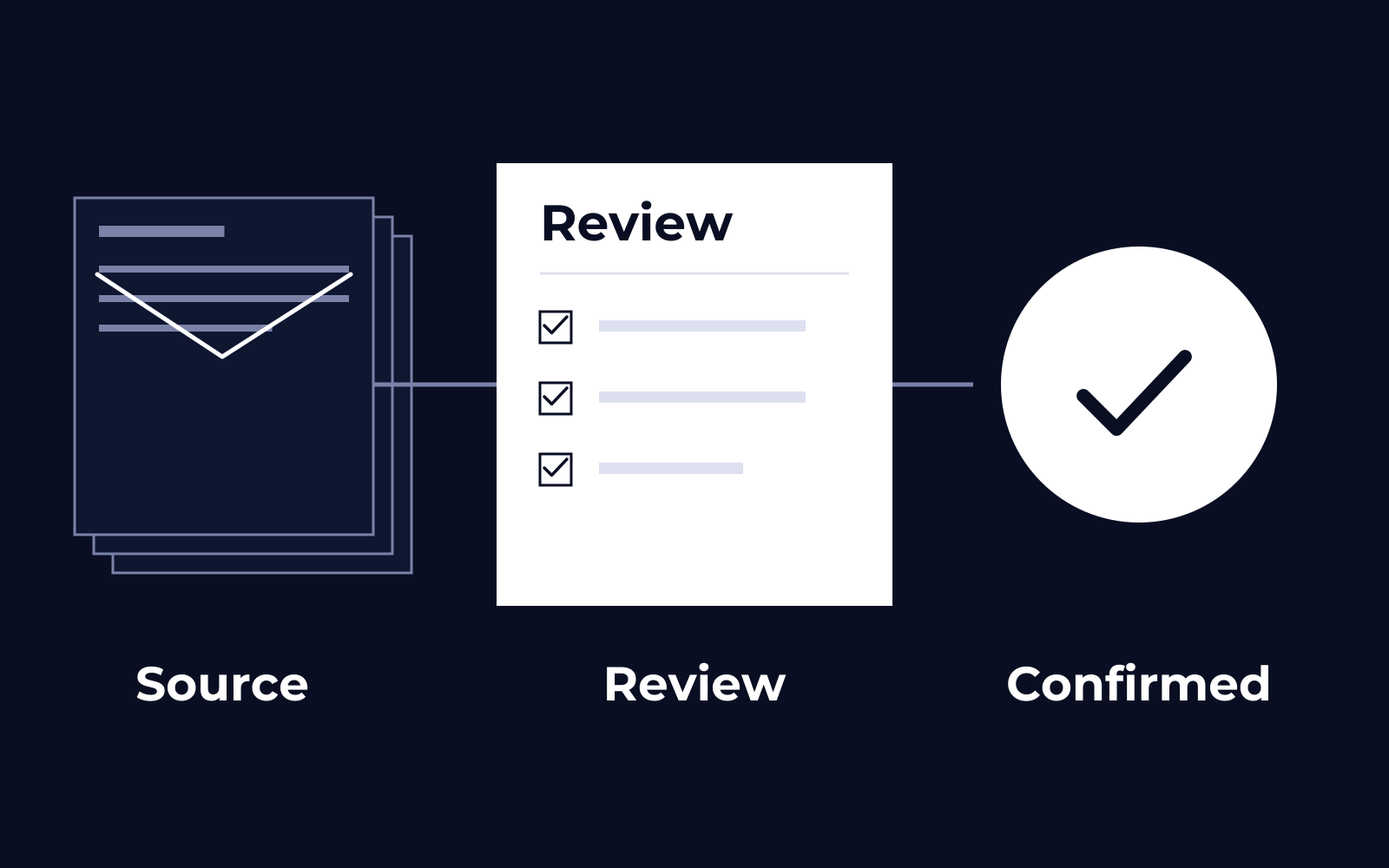
AI can help assemble an order from email and attachments, but the full workflow also needs product and account validation, review of exceptions and confirmation that the order system accepted the entry. The scenario below is hypothetical. It shows how a manufacturer could scope a first release without treating an extracted document as a completed order.
The useful starting point for AI engineering and operational redesign is the specialist's decision process. What evidence makes an order ready to enter? What requires clarification? And who has the authority to resolve it?
Keep the document connected to the draft
Design intake to preserve the original message, attachments, arrival time, and relationship between revisions. An extracted quantity should remain traceable to the document that supplied it. If two attachments disagree, the draft should expose the disagreement.
AI-assisted extraction can be evaluated for assembling a proposed order from varied documents. Treat that proposal as unverified input. Give operators a view that connects each important field to its source, so review does not require searching the inbox again. Missing information should remain visibly missing.
Validate against the rules of the business
Before requesting approval, check the proposed order against authoritative product, account, pricing, and delivery records. In this scenario, validation would need to establish:
- The dealer account and delivery location match permitted records.
- Product identifiers and units of measure map to current catalog entries.
- Prices, discounts, and requested terms fall within applicable rules.
- Required configuration details are present and compatible.
- The order is new, a revision, or a possible duplicate.
The manufacturer must decide where those rules live and who maintains them. A model's plausible interpretation is not authority to invent a replacement product or extend a commercial term. When the rules cannot resolve a case, the workflow needs a named escalation route.
Test a disagreement the operator would have to resolve
In this hypothetical order, an email requests 12 cases while the attachment lists 12 individual units. The product catalog distinguishes the two units of measure. The draft should retain both source values and flag the conflict, not choose whichever interpretation looks more likely.
The operator requests clarification from the dealer. Once the dealer confirms the quantity, the operator reviews the corrected draft and approves that version. The record retains the original request, clarification and approved value. This is a useful acceptance case because it tests extraction, business rules, human judgment and the audit trail together.
Make review an actual decision
Put the proposed order, source evidence, validation results, and unresolved issues in the same review surface. The operator should be able to approve, correct, request clarification, or route the case to someone with the necessary authority.
A price exception might go to sales operations. A configuration question might go to product support. Each route needs an owner and a visible status. Sending every problem to a general queue simply relocates the inbox bottleneck.
In the first release, require an authorized person to approve the order before it changes the system of record. Record that approval against the specific version reviewed. A subsequent revision should return the changed decision to review.
Confirm the write before closing the work
The integration should submit only the approved payload and capture the resulting order identifier and system response. If the request times out, establish whether the order was created before retrying. Otherwise, an uncertain response can become a duplicate order.
Keep failures visible and recoverable. Operators need to know whether the case is awaiting approval, being submitted, confirmed, or blocked. A draft assembled successfully is not a completed order, and a submitted order is not necessarily a promised shipment.
Measure the whole handoff
Begin with one dealer group and a limited product range. Test routine orders alongside revisions, missing configurations, conflicting attachments and possible duplicates. Use the same cases to compare the existing process with the proposed workflow, including review and clarification effort.
Compare time from receipt to confirmed entry, operator review effort, unresolved-case age, corrections, and duplicate incidents against the baseline. Include dealer clarification time. Faster extraction has little operational value if exceptions wait longer. Review the reasons for escalation before expanding scope; they will show whether the next investment belongs in AI, cleaner product data, or a clearer ordering process.
How much order work is still trapped in an inbox?
Bring recent order formats, common exceptions and the destination system. We’ll identify a first scope the order team can test.