

Start a conversation
Systems Integration

Connect records and actions across your business systems.

Move information and permitted actions between the applications your teams use. We work through the records, rules and exceptions that make an integration dependable in practice.

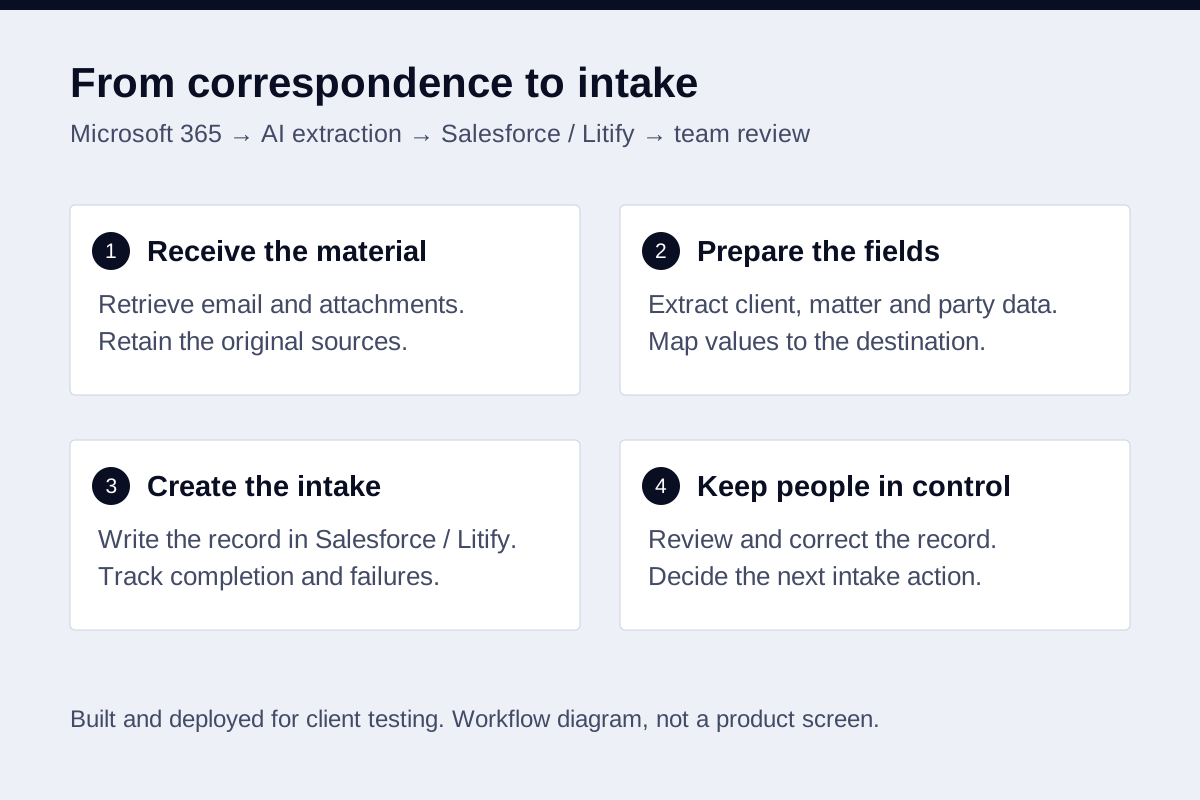
Legal intake workflow: receive email, extract and map information, create Salesforce/Litify records, then review with the intake team.
Legal intake. Built and deployed for client testing.

Relevant client work

Legal intake
BÜNDA project context
Client work

Connect the right studio to the right booking experience.

As BÜNDA adds locations, its website has to help people find a nearby studio and reach that studio's classes. Xivic improved the location finder and delivered booking pages for new studios and presale events.

Explore the BÜNDA work
Driven Brands project context
Client work

Bring more brands into Driven Dash.

Brand integrations and scheduling features extended Driven Dash, with metric-source documentation for the teams using its reports.

Explore the Driven Brands work

Which connection does the work need?

APIs and application connections

Connect source and destination records, establish field mappings and define ownership when systems disagree.

MCP and AI-connected tools

Give assistants access to approved information and bounded actions. Define permissions, user review and the behavior of each connected tool.

Migration and reconciliation

Plan how data moves, how the result is checked and what happens to incomplete, duplicated or unmatched records.

Define the rules between the systems.

Record ownership and mappings

Agree which application owns each record, how fields match and what should happen when values disagree. Include the identifiers needed to detect a repeated request or reconcile the result.

Permissions and review

Identify approved access, permitted actions and the point where a person must approve a change. For an assistant, define the exact tools and actions available to each user.

Failures and recovery

Decide what happens when a destination is unavailable or a record is incomplete. Make failed transfers visible and give the operating team a defined correction and retry path.

What the implementation leaves your team with.

A documented mapping and ownership model, the agreed working connection, representative test results and operating instructions. The scope also identifies deployment, monitoring and support responsibilities. Your application owners approve access, resolve conflicting business rules and accept the records or actions produced by the integration.

Start with one handoff and a small set of representative records. Verify that they reach the right destination, preserve the required values and expose exceptions before expanding the connection.

Which handoff keeps needing a person to repair it?

Bring the source and destination systems, a representative record and the task that depends on it. We will assess the available interfaces and define the first connection.

Discuss your systems