
When should you upgrade a platform, and when should you rebuild?
Separate the limits of the current technology from the changes the business actually needs.
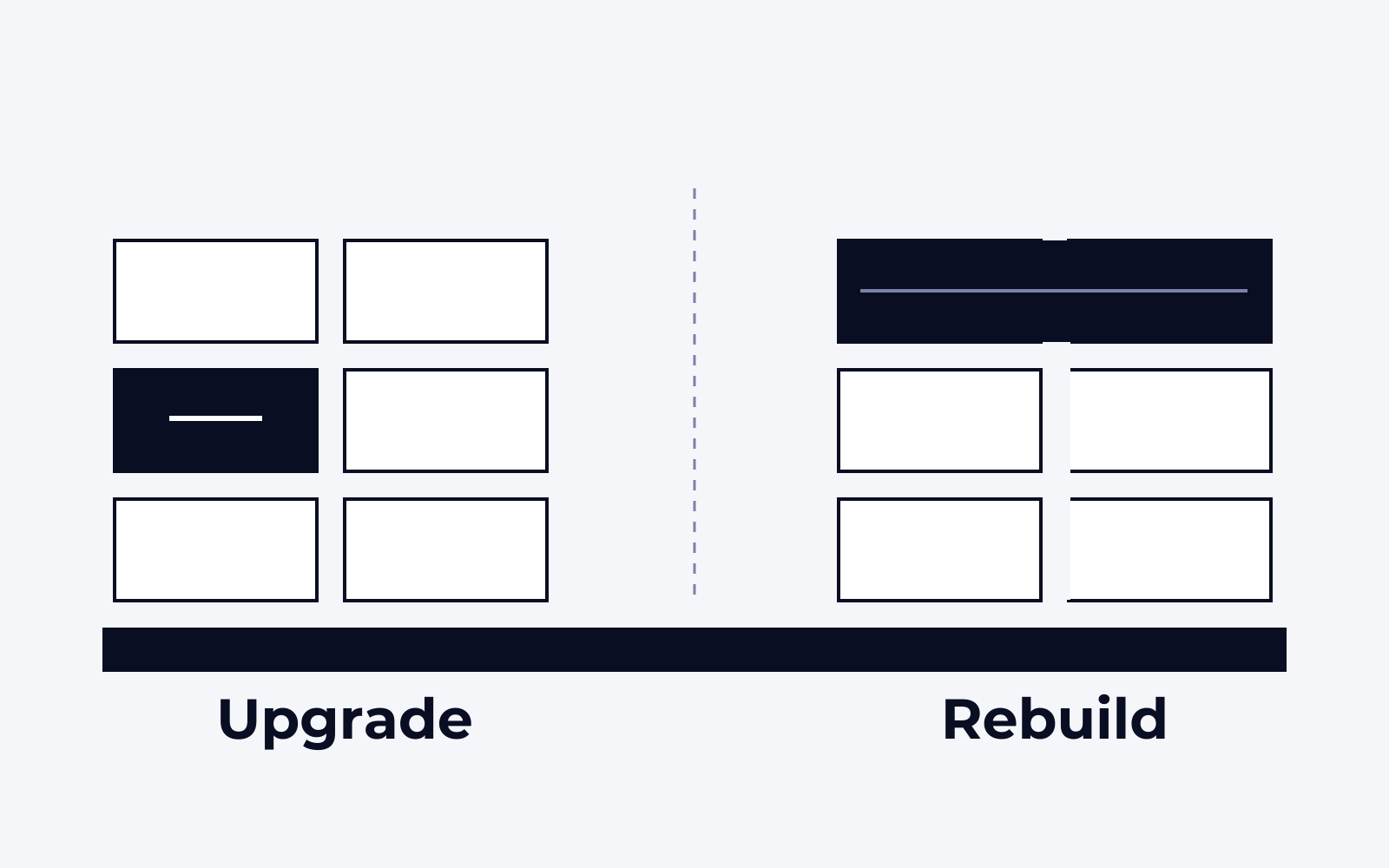
Upgrade when the business model still fits and the main constraint is the underlying software. Replace selected parts when a clear boundary lets you remove a bottleneck. Consider a rebuild when the required changes are fundamental enough that continued adaptation is the weaker path. Compare all three against transition cost, operating continuity and the next release the business needs.
The right decision starts with what the business needs to do next and what is preventing it. The age of a framework alone cannot answer that question.
Name the constraint before choosing the remedy.
Is the problem an unsupported dependency, a slow release process, a confusing user journey, poor data quality or an architecture that cannot support a necessary capability? These problems can overlap, but they call for different changes.
Write down the evidence for each concern. Which customer task fails? Which integration is unreliable? What change repeatedly takes too long? Which maintenance requirement is becoming difficult to meet? A specific constraint makes options comparable and prevents the replacement project from becoming a collection of unrelated wishes.
Understand what must survive the change.
Map critical tasks, user roles, data, integrations and unusual cases. Include the reports and exports that are easy to overlook because they sit outside the main interface. Talk with the people who handle exceptions. They often know which apparently minor behavior keeps the business moving.
In Xivic's Trevanna Tracks work, a licensing exception and a fee exception needed to remain separate decisions. A track could require payment even when it did not require a license. That rule affected document availability, track information and the experience around it. Changing the technology without understanding the rule would not have solved the product problem.
Compare three credible paths.
Upgrade the current platform when the core model still fits and the principal constraint is the underlying software. Include compatibility work, tests of critical behavior and a plan for issues uncovered during the upgrade.
Replace selected parts when a clear boundary lets you improve a constrained area while retaining useful systems. Be explicit about how old and new components exchange data and which one owns each action during the transition.
Rebuild the platform when the changes required are fundamental enough that continued adaptation is the weaker choice. The plan still needs to cover data migration, integrations, operating continuity and the work of retiring the old system.
Compare all three against the next useful release, total transition effort, ongoing maintenance and risk to the business. A smaller initial build is not automatically the least expensive path once parallel operation and migration are included.
Treat release planning as part of the decision.
A proposal should explain how the new behavior will be tested, who accepts it and what happens during cutover. Define data reconciliation, recovery arrangements and ownership after launch before those questions become urgent.
For CIWC, Xivic upgraded the existing application frameworks and coordinated client review, production preparation and the final database copy before the September 2025 go-live. The transition work belonged in the upgrade scope because the application still had to serve its users when the engineering was finished.
Ask every option to show its transition burden.
Require the upgrade, selective replacement and rebuild proposals to cover the same items: data migration and reconciliation, integrations, user retraining, parallel operation, support during cutover and retirement of the old system. Name the critical customer task each option can release first.
Then test the recommendation against one consequential exception from the current platform. If the proposed new model cannot represent that rule, the estimate is missing either a product change or an engineering requirement. Resolve that gap before treating the options as comparable.
Choose the next decision you can validate.
You do not need a fully specified replacement to make progress. A focused assessment can establish the critical constraints, compare the paths and identify a first release that tests the recommendation. It should leave leadership with a decision, its tradeoffs and a scope that can be estimated.
The aim is a platform that supports the next stage of the business, with a transition the organization can absorb. Sometimes that calls for a rebuild. Often it calls for a more selective change. The evidence should decide.
What is your platform holding back?
Show us the current system, the next business requirement and the constraints around release.