
Build a practical AI value creation plan across the portfolio.
Decide which AI opportunities and capabilities should be shared across portfolio companies, with clear ownership, measured value and transferable operations.
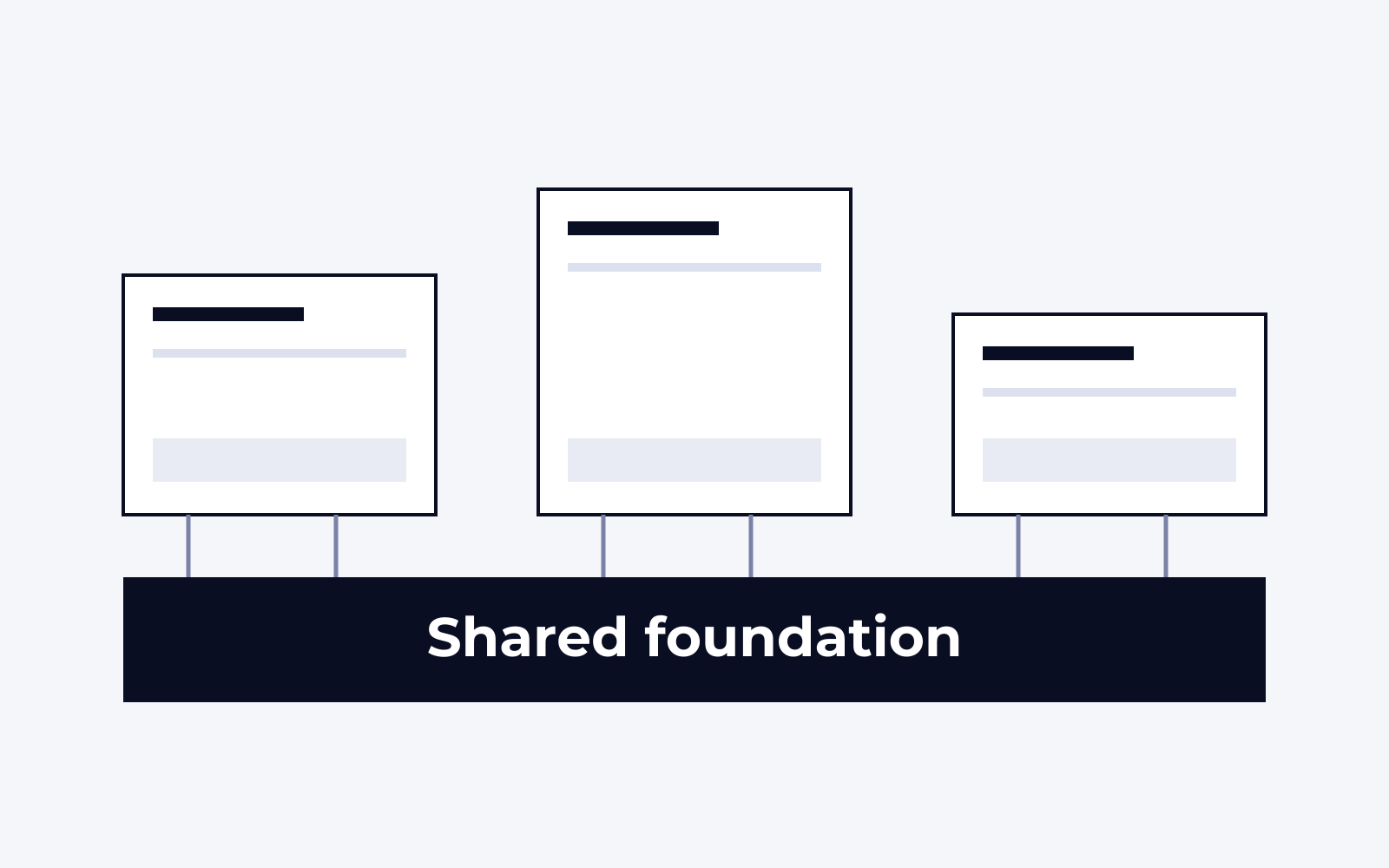
Build a portfolio AI value creation plan by identifying a repeated operating problem, proving a useful change in one company and checking what another company can reuse. The shared investment should earn its cost through a credible second use. Similar problems alone do not establish that businesses need the same software or workflow.
For an operating partner, the planning question is which capabilities belong with each company and which are worth maintaining together. Answer it with management, the people doing the work and the owners of the underlying systems. A portfolio plan needs those decisions before it needs a common platform.
Compare opportunities without erasing the differences
Use the same brief across candidate companies: the task, current volume and effort, common exceptions, source systems, operating owner and intended result. Comparable descriptions make repeated problems visible without assuming that their causes are identical.
Consider two hypothetical distributors handling emailed quote requests. Both teams spend time interpreting requests. One has reliable product records and an accessible pricing system; the other reconciles inconsistent catalogs manually. The first may be ready to evaluate assisted preparation. The second may need product-data work before the same approach can be useful.
Fund a first release that management can evaluate
Select a company with accessible evidence, a participating process owner and a result that can be checked. Define the supported requests, human decisions, destination system and acceptance cases. Include the exception that would make the proposed improvement fail in everyday use.
Measure the complete task, including review and correction. Record implementation and ongoing operating costs. Time released becomes a cost reduction only when spending changes; additional capacity becomes a revenue opportunity only when demand and the commercial process can use it. Keep those claims separate in management reporting.
Decide what the second company can share
After the first release, inspect the components that might transfer. A document-processing connection, evaluation method or access-control pattern may be reusable. Product matching, pricing authority and customer commitments may depend on the company’s own rules.
- Common requirement: name the same task or technical responsibility both companies need.
- Local differences: list the data, integrations, permissions and operating rules that require adaptation.
- Adoption cost: estimate configuration, migration, testing, training and ongoing support for the second use.
- Shared owner: identify who funds maintenance, approves changes and resolves failures affecting several companies.
Use shared definitions while keeping information separated according to each company’s permissions and agreements. A common reporting measure may be valuable even when records remain in separate systems. Reuse does not require every company to adopt identical processes.
Review the economics after adoption
Keep a record of the specific work the second implementation avoided, the adaptation it required and the additional support burden. Compare those costs with a separate implementation of the same scope. A smaller second project does not, by itself, demonstrate that sharing created the saving.
Review the shared capability alongside its consumers. If changes for one company repeatedly disrupt another, reconsider the boundary. If few teams adopt it, investigate fit and operating cost before funding more features. Expansion should follow demonstrated usefulness rather than a target number of companies connected.
Make the operating capability understandable at transition
During ownership or management changes, the receiving team needs to know what the system does, what it depends on and who can maintain it. Keep architecture, data definitions, access arrangements, costs and operating instructions current. Identify any shared services the company would need to retain, replace or separate.
This preparation makes the capability easier to evaluate and operate. Its effect on enterprise value depends on the business and transaction; a deployed AI workflow does not establish a valuation premium. The portfolio plan should show what changed, what the change costs and how the company can keep using it.
Which portfolio problem is worth solving together?
Bring one operating priority and two companies that may share it. We can assess the common work, the important differences and a first scope management can evaluate.