
A useful AI support assistant knows when to hand over.
Design support assistants around approved knowledge, explicit action permissions, and a human handover that preserves the customer's progress.
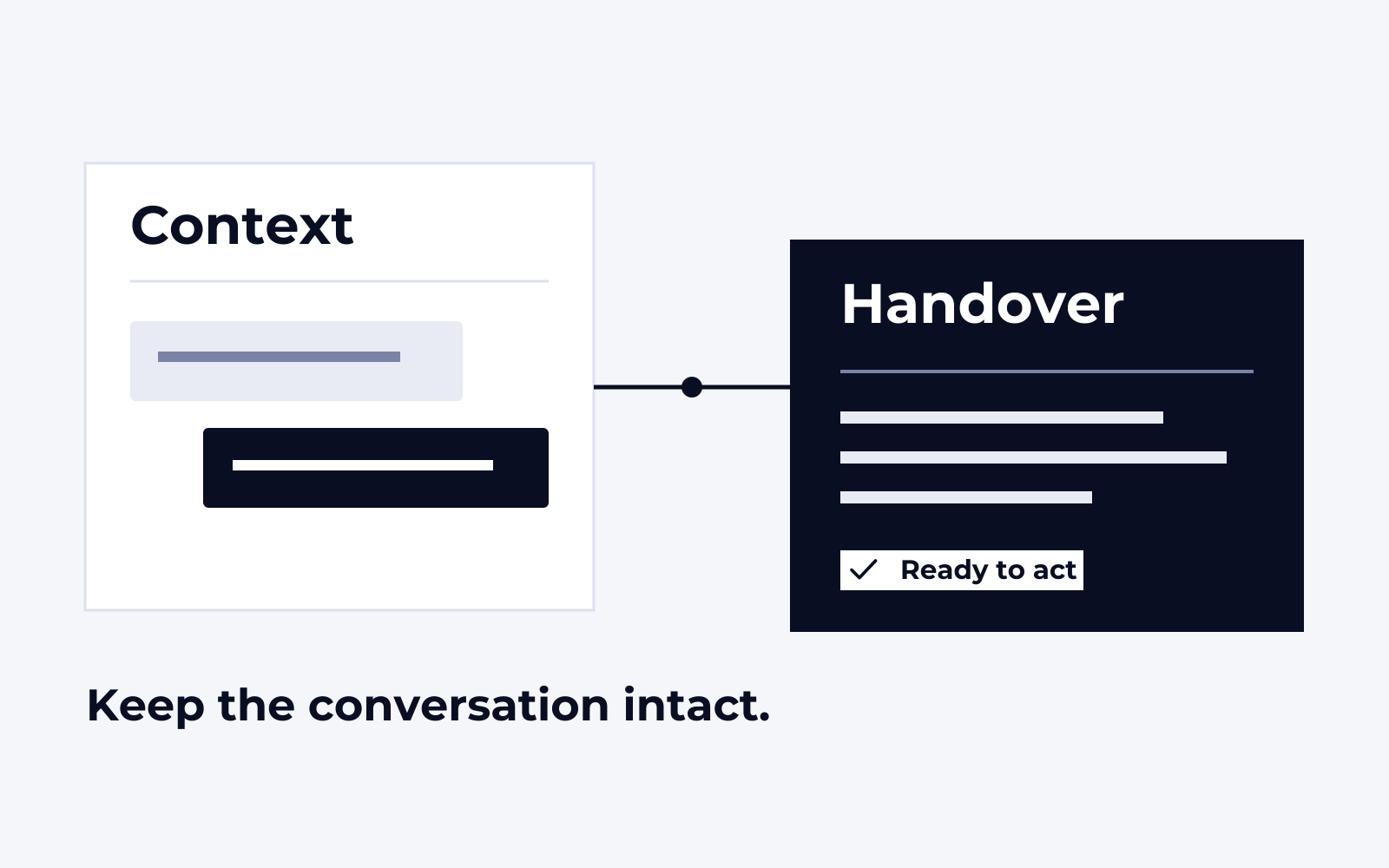
An AI support assistant should hand over when the customer asks for a person, the request exceeds its authority, the evidence conflicts or attempts to resolve the issue fail. The transfer should carry the customer’s goal, completed checks and reason for escalation, so the employee can continue the work instead of restarting the conversation.
Define a bounded job
Begin with a recognizable request and the evidence needed to resolve it. An assistant that explains delivery status from an approved order system has a clearer job than one asked to handle customer service. Define the eligible customers, supported products, accepted sources, and conditions that end its responsibility.
Give each knowledge source an owner and a review cycle. When policies conflict, the assistant needs a precedence rule. When the applicable policy is missing or outdated, it needs an escalation path. A confident answer should never substitute for missing evidence. The interface should distinguish confirmed information from a suggested next step.
Separate answer rights from action rights
Reading a customer's order, recommending a change, and submitting that change require different permissions. Design those permissions in the application and connected systems. Instructions to the model alone should not determine whether an action is authorized.
Consider a hypothetical returns assistant. It might explain the published return window and check whether an order falls within it. Issuing a refund requires separate checks for customer identity, order eligibility, amount, and prior refunds. An exception could require an employee's approval. Show the proposed action before confirmation, then report the result returned by the system. If execution fails, say that the refund has not been completed.
Make handover a complete transaction
Escalation should happen when the customer asks for a person, the request falls outside scope, evidence conflicts, or repeated attempts do not resolve the issue. Sensitive complaints and decisions outside approved authority also need explicit routing. Do not make an unhappy customer discover the correct phrase to escape the conversation.
The receiving employee needs the customer's goal, relevant context, checks already completed, sources consulted, and the reason for escalation. Transfer only information the employee is authorized to receive. Tell the customer which team now owns the request, what will happen next, and what timing can actually be supported. A handover is unfinished until ownership is clear.
Evaluate the whole resolution
Test the workflow using real request patterns with appropriate privacy controls. Include ambiguous wording, unavailable systems, outdated documents, repeated requests, and attempts to obtain information belonging to another customer. Check whether the assistant recognizes when it lacks sufficient evidence. Review action logs alongside conversation transcripts so a well-written reply cannot conceal a failed operation.
Measure verified resolution, repeat contact, incorrect actions, and the quality of escalations. Containment rate can be useful, but a conversation that never reaches a person is not necessarily a successful outcome. Establish a baseline and inspect the cases behind changes in the numbers. Give the support owner authority to narrow the assistant's scope when problems appear.
Write release checks as expected outcomes
For the hypothetical returns assistant, evaluate at least these cases with the support owner:
- The customer asks for a person: the assistant offers the supported handover route without requiring another attempted answer.
- Two policy records conflict: it follows an approved precedence rule or escalates with both sources, rather than inventing a resolution.
- A refund request times out: it checks the transaction state before retrying and does not report success without confirmation.
- The receiving team is unavailable: it creates a recoverable case through an approved fallback and gives the customer an accurate next step.
Agree which failures block release and who can accept a limited scope. Then review the unresolved cases after launch. A high containment rate does not compensate for an incorrect refund or a customer stranded between queues.
Start with one request type
Select a frequent request with reliable source information and a clear owner. Write the answer boundaries, action permissions, and handover rules before choosing the interface. Before adding another request type, inspect unresolved cases with the support owner. Expand only when the assistant completes its authorized task reliably, identifies its limits and transfers exceptions to a team that can resolve them.
Where do your support conversations get stuck?
Bring a recurring request type and a few resolved and unresolved cases. We’ll map the information, permissions and handoff it needs.