
Beyond the agency model: evaluate the delivery you are buying.
Compare AI-enabled services partners on working deliverables, commercial assumptions, reuse, operating ownership and evidence of the result.
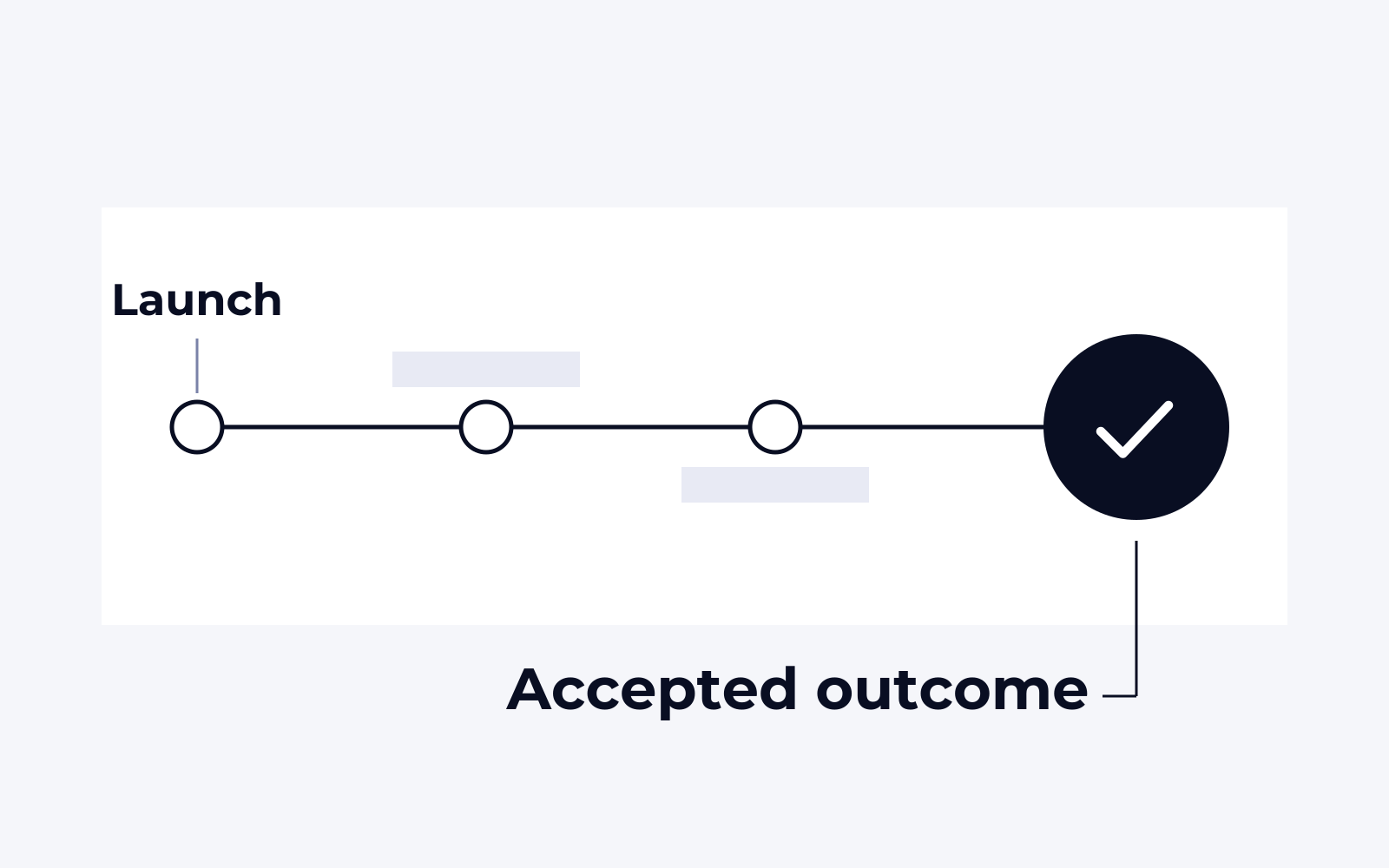
Evaluate an AI-enabled services partner on the work it will put into use, the evidence it will collect and the responsibilities it will leave with your team. AI can change how research, design and engineering are performed. The buying decision still depends on whether the proposed engagement addresses your operating problem and makes its assumptions visible.
A shorter proposal or lower fee may reflect better tools, a narrower scope or work left for your employees. Compare those possibilities before interpreting price as evidence of efficiency. The same discipline applies to a large team: understand what each role contributes and which decisions require its involvement.
Compare the work that will actually be delivered
Give competing partners the same brief: the user task, systems involved, current burden and conditions the release must handle. Ask each to show the first usable result, how it will be accepted and what remains outside the scope.
For a hypothetical service-request workflow, that result could include a connected intake, a review queue, a tested correction path and operating instructions. A demonstration that extracts a few fields covers only part of that scope. Include deployment, training, failure recovery and the support needed after handover in the comparison.
Ask where AI changes the delivery work
Ask the partner which tasks use AI, which information those tools can access and who checks their output. Useful answers name the actual activity: preparing research summaries, generating code, testing interface states or assembling a draft record. A percentage of work described as AI-powered tells you little about the quality of the result.
Review how the team validates generated work, handles confidential material and detects errors that look plausible. Keep acceptance criteria tied to the finished behavior. Fast code generation has limited value if integration, review or maintenance becomes more difficult.
Choose commercial terms that fit the uncertainty
A fixed scope can be useful when the deliverables and acceptance criteria are understood. A time-based assessment can suit a problem whose dependencies still need investigation. An outcome-linked component needs an agreed baseline, a reproducible measure and clarity about which influences each party controls.
Ask what happens when access is delayed, a source system changes or a business rule proves incomplete. Compare the change process, approval responsibilities and treatment of additional work. The contract should make those decisions manageable rather than hide uncertainty inside an attractive headline price.
Inspect what your team can operate afterward
Reusable components can reduce repeated work, but examine what adoption requires. Which parts already exist? Which need configuration or integration? Who maintains them, and what happens if your team changes partners?
- Working assets: identify the code, configurations, design files and documentation included in the handoff.
- Access and dependencies: record hosting, software services, credentials, usage costs and the people responsible for them.
- Operating ownership: name who monitors the system, handles exceptions, approves changes and can stop or recover it.
Request a walkthrough of the proposed handoff using a comparable, shareable project. It should show how another team understands and operates the work, with the limits of reuse stated clearly.
Make the selection support the next decision
Choose a partner whose proposal connects the business priority, first release and evaluation plan. Agree when management will review adoption, support effort and the operating measure, including the cost of running the new workflow. Define what would justify expansion, another iteration or stopping.
The useful shift in services economics is a closer connection between what you buy and what the business can use. AI should help the team deliver that connection. It does not remove the need for accountable decisions, maintainable systems and evidence after launch.
What should your next delivery partner leave working?
Bring the business priority and the scope you are considering. We can work through the deliverables, operating responsibilities and evidence needed to judge the engagement.