
Measure the operating change, not just the launch.
A working release is a milestone. The next question is whether the work itself has improved.
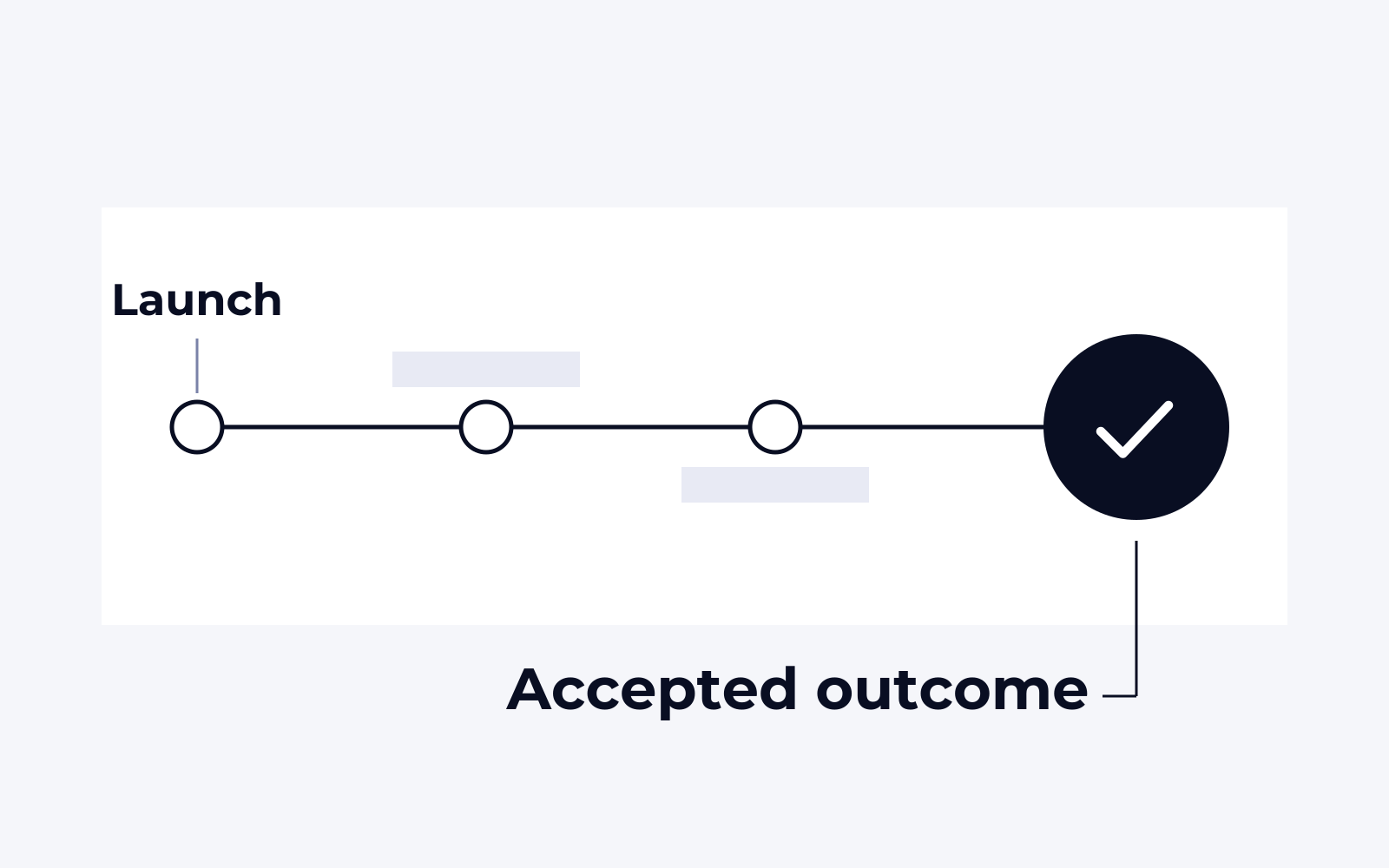
Judge a release on three questions: does it work, do people use it and has the operating result improved? A feature can pass acceptance testing while staff work around it. Track delivery, adoption and outcome separately so the next review can decide whether to expand, repair or stop the investment.
Write the intended change before the scope.
Describe the work in practical terms. An intake team should spend less time transferring information. A customer should be able to understand a product and request a useful conversation. An operator should resolve an exception without searching several systems.
Then identify the measure that would demonstrate improvement. For an intake workflow, elapsed time, handling effort, correction rate and unresolved exceptions tell different parts of the story. For a buying journey, a button click, a submitted form, a booked meeting and a qualified opportunity are distinct events.
Choose a small number of measures that match the decision. Collecting everything can leave the team with a large dashboard and no agreed test of success.
Make the baseline reproducible.
Record how a measure is calculated, who owns it, which cases are included and the period it covers. Capture important differences in the work, such as routine requests versus complex exceptions. If the starting data is incomplete, use a representative sample and make that limitation explicit.
A baseline is also an opportunity to check instrumentation. In Xivic's HireVue work, demo-form submissions and chatbot meeting bookings needed to be distinguished in reporting. Combining them without preserving their definitions would make later comparisons less useful.
Track delivery, adoption and outcome separately.
Delivery evidence establishes that the capability exists and behaves as intended. This includes tested scenarios, release verification and agreed acceptance criteria.
Adoption evidence shows whether the intended people use it in their actual work. Look at completion, abandoned steps, workarounds and the cases that still require manual intervention.
Outcome evidence shows the operating change over an appropriate period. Review speed alongside quality and effort. A faster first step may create more review work downstream. A larger volume of inquiries may not produce more useful sales conversations.
Xivic's legal intake workflow was deployed for client testing. The useful measures for the next stage are the reviewer’s corrections, processing failures and time to a completed intake. These reveal whether automated preparation reduces the work or moves it to a different step.
Review the result in context.
Changes in traffic, staffing, demand or case complexity can affect the result. Record them so the team can understand what a comparison does and does not establish. Use a control or staged rollout where practical, and avoid presenting a small or incomplete observation as a durable result.
In the historical goop newsletter work, Xivic compared on-site behavior for test and control audiences and identified email-platform data needed for the fuller picture. The value of the review included understanding the missing information. A measurement gap is something to resolve, rather than a reason to manufacture certainty.
Decide what the evidence authorizes next.
Set the review date and the decision rules before launch. Use the baseline and the accepted quality requirements to interpret these patterns:
- The system works but use is low: inspect workflow fit, access, training and manual workarounds before adding features.
- Use is high but the result is unchanged: check downstream review effort, delays and whether the chosen measure captures the intended benefit.
- Speed improves while errors increase: narrow the scope or strengthen review before expanding.
- The result improves and the cost is understood: consider expansion, while testing whether the next audience or case type has different requirements.
Record the decision, owner and next observation period. Keep released capacity separate from a reduction in spending unless the business has actually changed its costs. A useful review ends with a justified action, including stopping an approach that no longer earns its investment.
What should be different after launch?
Bring the workflow, the current burden and the decision you want the evidence to support.