
Five manufacturing workflows worth evaluating for AI.
Compare quoting, dealer support, service requests, forecasting and parts planning against the evidence, controls and operating change each requires.
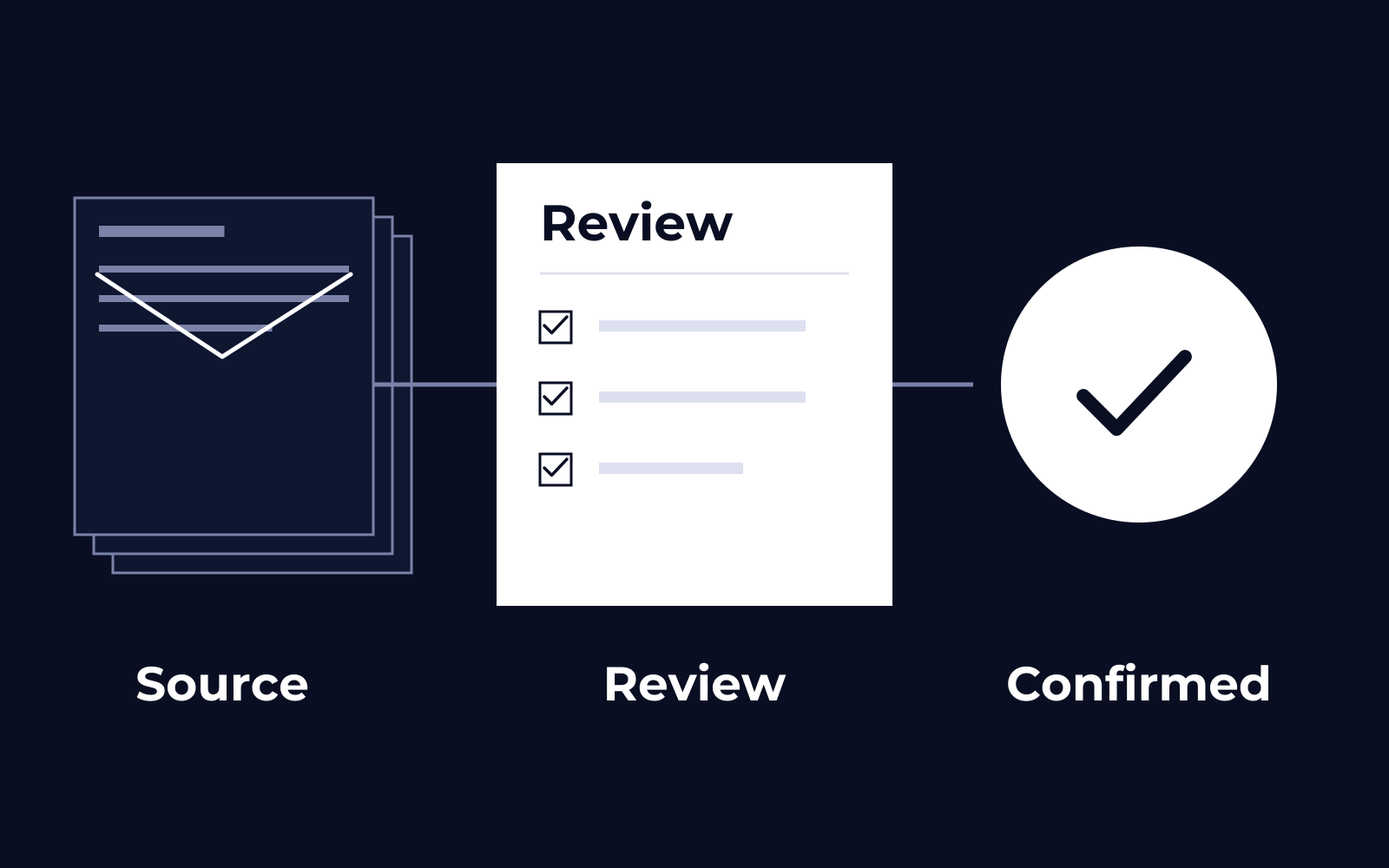
The strongest first manufacturing AI investment addresses a recurring operating constraint with accessible evidence and an accountable owner. That could be quotation preparation, dealer support, service intake, forecasting or parts planning. These workflows have different data needs and consequences. Compare them before deciding which deserves a build budget.
Start with the delay or correction burden the team can demonstrate. Then separate work that requires interpreting variable information from work better handled by existing business rules, conventional forecasting or a repaired system connection. A useful first release does not need broad autonomy.
Quoting: prepare the decision before automating the commitment
Consider quoting when specialists repeatedly transfer customer requirements between email, product records and a pricing system. A first release could assemble the request, suggest product matches and identify missing configuration details. Approved pricing and eligibility rules should remain authoritative.
Test an ordinary request, an ambiguous specification and a price exception. Require the reviewer to see the source information and unresolved questions. Measure time to an accepted quote, including clarification and correction. Keep final commercial commitments with the authorized person until the workflow can enforce the required controls.
Dealer support: remove the search burden
Consider dealer assistance when partners struggle to find current specifications, training or account-specific information. Start with one frequent request and the sources that can answer it. Separate public product information from records restricted to an account or territory.
Test whether the assistant retrieves the current answer, respects access restrictions and transfers an unresolved request to someone who can act. Faster responses are useful only when dealers can complete the task. Track repeat requests, incorrect answers and the work left for the field team.
Service requests: complete the handover
Order status, returns and warranty intake can be bounded starting points when source systems and policies are reliable. Define whether the assistant may explain, prepare a case or change a record. Those are different permissions.
A hypothetical warranty request might include a serial number, proof of purchase and a description of the fault. The assistant could assemble that evidence and identify missing items. The policy owner still decides which eligibility checks can be enforced automatically and which exceptions require review. Include the complete evidence when transferring the case.
Forecasting: establish a comparison the planner trusts
Consider forecasting when historical demand, substitutions, stockouts and forecast revisions can be inspected together. Begin by reproducing the current forecast and identifying the decisions it informs. An advanced model is difficult to evaluate against an undocumented baseline.
Compare candidate methods on the same historical periods and product groups, including demand changes. Examine both error and the inventory or scheduling decision that follows. Keep planner overrides visible with their reasons. The first question is whether the proposed method improves planning, not whether it qualifies as an agent.
Parts planning: connect recommendations to service reality
Consider parts recommendations when service history, equipment identifiers, inventory and fulfillment records are sufficiently consistent. Test whether the data describes the installed equipment and the parts actually used. Missing service records can weaken an apparently precise recommendation.
Start with one equipment family or service region. Review stock availability, substitutions and the cost of unnecessary inventory alongside missed jobs or repeat visits. Retain approval for replenishment or dispatch decisions until the team understands the recommendation's limits and can recover from mistakes.
Choose the first release on evidence
For each candidate, record the current burden, available inputs, permitted actions, operating owner and test of success. Select a bounded workflow whose result can be checked against recent cases. Defer candidates that depend on inaccessible records or unresolved policies.
Do not assume the same sequence fits every manufacturer. A quoting bottleneck may justify immediate work at one business, while inconsistent product identifiers make data repair the necessary first investment at another. Expand only when the first release reduces the whole task's burden without creating unacceptable downstream work.
Which manufacturing workflow should you tackle first?
Bring a recurring bottleneck, recent transactions and the systems involved. We can help define a scope your operating team can evaluate.